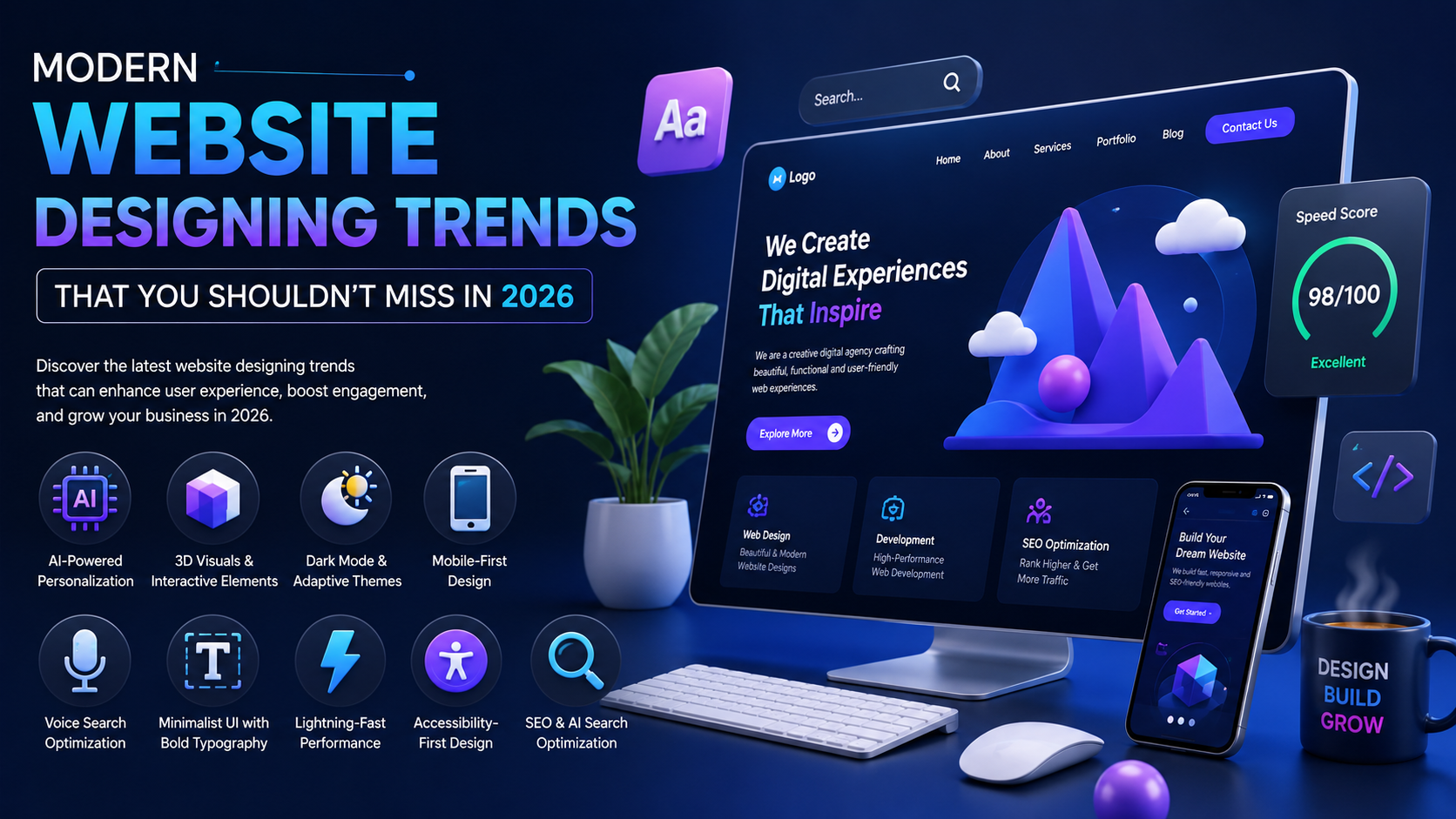
Modern Website Designing Trends
In 2026, a website is more than just an online presence—it’s the digital face of your business. Modern users expect websites to be fast, visually appealing, mobile-friendly, and powered by intelligent technology. Businesses that embrace the latest website design trends can improve user experience, increase conversions, and strengthen their online brand. Top Marketing Agency
Here are the top website designing trends that every business should know in 2026.
1. AI-Powered Personalization
Artificial Intelligence is transforming web design by delivering personalized experiences based on visitor behavior. From AI chatbots to customized product recommendations and dynamic content, businesses are using AI to improve engagement and increase conversions.
Benefits:
- Personalized user experience
- Higher conversion rates
- Better customer engagement
- Smart product recommendations
2. 3D Visual Elements & Interactive Graphics
Modern websites are adopting immersive 3D illustrations, animations, and interactive objects that create a premium user experience. These visuals make brands stand out and encourage visitors to spend more time exploring the website.
Best For:
- Real Estate
- SaaS Companies
- Fashion Brands
- Jewellery Brnads
- Healthcare
- E-commerce Stores
3. Dark Mode & Adaptive Themes
Dark mode continues to grow in popularity because it reduces eye strain and gives websites a sleek, modern appearance. Many websites now allow visitors to switch between light and dark themes automatically.
Advantages:
- Modern look
- Improved readability
- Better battery efficiency on OLED devices
- Enhanced accessibility
4. Mobile-First Responsive Design
With the majority of internet users browsing on smartphones, designing for mobile first is no longer optional. Responsive websites ensure a seamless experience across mobiles, tablets, and desktops.
Why It Matters:
- Better Google rankings
- Faster loading speed
- Improved user experience
- Higher conversion rates
5. Voice Search Optimization
Voice assistants are becoming part of everyday life, making voice search optimization essential. Websites should use conversational content, structured data, and FAQ sections to improve visibility in voice search results.
Optimization Tips:
- Use natural language
- Include long-tail keywords
- Add FAQ sections
- Improve page speed
6. Minimalist UI with Bold Typography
Clean layouts combined with bold fonts and strategic white space create an elegant and professional appearance. Minimalist design helps visitors focus on your message without unnecessary distractions.
Features:
- Large headings
- Clean navigation
- Simple color palettes
- High readability
7. Micro-Animations & Interactive Effects
Small animations on buttons, icons, menus, and scrolling elements make websites feel more interactive and engaging without affecting performance.
Examples:
- Hover animations
- Animated buttons
- Scroll-triggered effects
- Loading animations
8. Lightning-Fast Performance
Website speed directly impacts SEO, user satisfaction, and sales. Modern websites prioritize optimized images, efficient coding, caching, and lightweight frameworks.
Performance Checklist:
- Core Web Vitals optimization
- Lazy loading
- Image compression
- CDN integration
- Clean code structure
9. Accessibility-First Design
Inclusive design ensures that websites are usable by everyone, including people with disabilities. Accessibility also improves SEO and demonstrates a commitment to user-friendly experiences.
Accessibility Features:
- Keyboard navigation
- Proper color contrast
- Screen reader compatibility
- Alt text for images
- Readable typography
10. AI Search & SEO-Ready Websites
As AI-powered search engines become more common, websites need to be optimized beyond traditional SEO. Structured data, semantic HTML, fast loading times, and high-quality content improve visibility across both search engines and AI-driven platforms. Digital Marketing Service
Focus Areas:
- Schema markup
- Semantic HTML
- Helpful, original content
- Optimized metadata
- Strong internal linking
Final Thoughts
Website design in 2026 is all about combining creativity with technology. Businesses that adopt AI-powered personalization, mobile-first development, fast performance, interactive 3D visuals, accessibility, and SEO-friendly architecture will be better positioned to attract visitors and convert them into customers.
FAQs – top web development companies in india
1. Why is modern website design important in 2026?
Modern website design improves user experience, increases trust, supports SEO, and helps businesses generate more leads and sales.
2. What is the biggest website design trend in 2026?
AI-powered personalization, responsive design, interactive 3D elements, and performance optimization are among the biggest trends.
3. Does website speed affect SEO?
Yes. Faster websites generally provide a better user experience and can contribute to improved search rankings.
4. Is mobile-first design still necessary?
Absolutely. Since most users browse on mobile devices, mobile-first design is essential for usability and search visibility.
5. How often should a website be redesigned?
Most businesses benefit from reviewing their website every 2–3 years, while making ongoing updates for security, performance, and evolving user expectations.
Modern Website Designing Trends
In 2026, a website is more than just an online presence—it’s the digital face of your business. Modern users expect websites to be fast, visually appealing, mobile-friendly, and powered by intelligent technology. Businesses that embrace the latest website design trends can improve user experience, increase conversions, and strengthen their online brand. Top Marketing Agency
Here are the top website designing trends that every business should know in 2026.
1. AI-Powered Personalization
Artificial Intelligence is transforming web design by delivering personalized experiences based on visitor behavior. From AI chatbots to customized product recommendations and dynamic content, businesses are using AI to improve engagement and increase conversions.
Benefits:
- Personalized user experience
- Higher conversion rates
- Better customer engagement
- Smart product recommendations
2. 3D Visual Elements & Interactive Graphics
Modern websites are adopting immersive 3D illustrations, animations, and interactive objects that create a premium user experience. These visuals make brands stand out and encourage visitors to spend more time exploring the website.
Best For:
- Real Estate
- SaaS Companies
- Fashion Brands
- Jewellery Brnads
- Healthcare
- E-commerce Stores
3. Dark Mode & Adaptive Themes
Dark mode continues to grow in popularity because it reduces eye strain and gives websites a sleek, modern appearance. Many websites now allow visitors to switch between light and dark themes automatically.
Advantages:
- Modern look
- Improved readability
- Better battery efficiency on OLED devices
- Enhanced accessibility
4. Mobile-First Responsive Design
With the majority of internet users browsing on smartphones, designing for mobile first is no longer optional. Responsive websites ensure a seamless experience across mobiles, tablets, and desktops.
Why It Matters:
- Better Google rankings
- Faster loading speed
- Improved user experience
- Higher conversion rates
5. Voice Search Optimization
Voice assistants are becoming part of everyday life, making voice search optimization essential. Websites should use conversational content, structured data, and FAQ sections to improve visibility in voice search results.
Optimization Tips:
- Use natural language
- Include long-tail keywords
- Add FAQ sections
- Improve page speed
6. Minimalist UI with Bold Typography
Clean layouts combined with bold fonts and strategic white space create an elegant and professional appearance. Minimalist design helps visitors focus on your message without unnecessary distractions.
Features:
- Large headings
- Clean navigation
- Simple color palettes
- High readability
7. Micro-Animations & Interactive Effects
Small animations on buttons, icons, menus, and scrolling elements make websites feel more interactive and engaging without affecting performance.
Examples:
- Hover animations
- Animated buttons
- Scroll-triggered effects
- Loading animations
8. Lightning-Fast Performance
Website speed directly impacts SEO, user satisfaction, and sales. Modern websites prioritize optimized images, efficient coding, caching, and lightweight frameworks.
Performance Checklist:
- Core Web Vitals optimization
- Lazy loading
- Image compression
- CDN integration
- Clean code structure
9. Accessibility-First Design
Inclusive design ensures that websites are usable by everyone, including people with disabilities. Accessibility also improves SEO and demonstrates a commitment to user-friendly experiences.
Accessibility Features:
- Keyboard navigation
- Proper color contrast
- Screen reader compatibility
- Alt text for images
- Readable typography
10. AI Search & SEO-Ready Websites
As AI-powered search engines become more common, websites need to be optimized beyond traditional SEO. Structured data, semantic HTML, fast loading times, and high-quality content improve visibility across both search engines and AI-driven platforms. Digital Marketing Service
Focus Areas:
- Schema markup
- Semantic HTML
- Helpful, original content
- Optimized metadata
- Strong internal linking
Final Thoughts
Website design in 2026 is all about combining creativity with technology. Businesses that adopt AI-powered personalization, mobile-first development, fast performance, interactive 3D visuals, accessibility, and SEO-friendly architecture will be better positioned to attract visitors and convert them into customers.
FAQs – top web development companies in india
1. Why is modern website design important in 2026?
Modern website design improves user experience, increases trust, supports SEO, and helps businesses generate more leads and sales.
2. What is the biggest website design trend in 2026?
AI-powered personalization, responsive design, interactive 3D elements, and performance optimization are among the biggest trends.
3. Does website speed affect SEO?
Yes. Faster websites generally provide a better user experience and can contribute to improved search rankings.
4. Is mobile-first design still necessary?
Absolutely. Since most users browse on mobile devices, mobile-first design is essential for usability and search visibility.
5. How often should a website be redesigned?
Most businesses benefit from reviewing their website every 2–3 years, while making ongoing updates for security, performance, and evolving user expectations.