

Personal Brand vs Company Brand: What Should B2B Founders

For Daily update Join here

Personal Brand vs Company Brand: What Should B2B Founders

Personal Brand vs Company Brand

Building visibility is one of the hardest problems in B2B growth. Most founders struggle to decide whether to invest in themselves or in the company brand first. This confusion often leads to scattered efforts and slow pipeline growth.

When you break it down, Personal brand vs company brand is not just a branding question. It directly impacts your inbound pipeline, sales cycles, and trust velocity. The right approach depends on your stage, market, and distribution strategy.  Personal Brand vs Company Brand

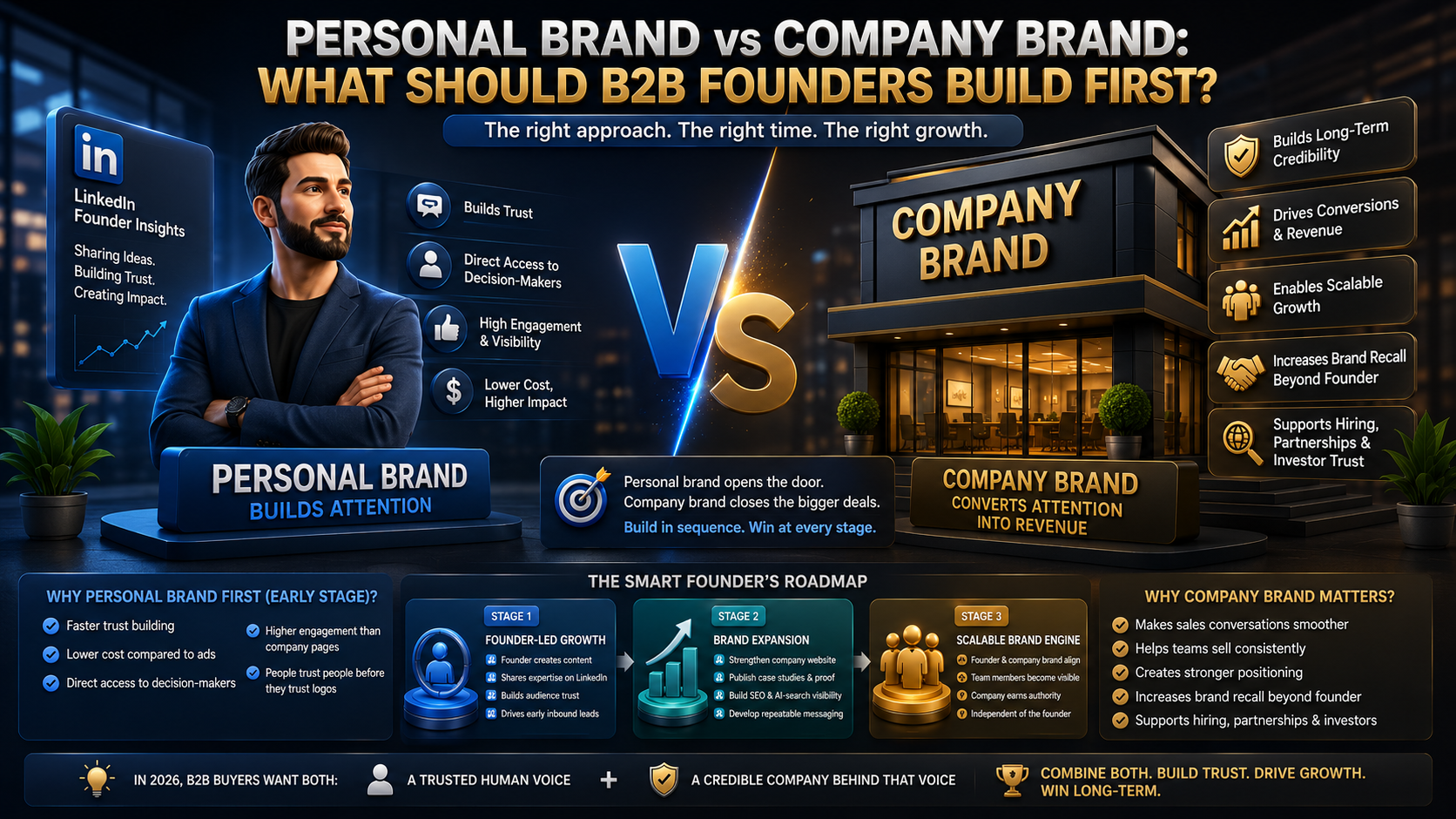
Once your business starts getting consistent inbound interest, referrals, or demo requests, buyers begin evaluating the company more seriously. At this stage, investing in company branding becomes essential.

Here’s why company branding matters:

  • Builds long-term business credibility
  • Makes sales conversations smoother
  • Helps teams sell consistently
  • Creates stronger positioning against competitors
  • Increases brand recall beyond the founder
  • Supports hiring, partnerships, and investor trust

A strong company brand includes:

  • Professional website and SEO
  • Clear positioning and messaging
  • Case studies and client success stories
  • Consistent design and content strategy
  • GEO and AEO optimization for AI search visibility

This is where the balance between personal brand vs company brand becomes important. Personal branding may open the door, but company branding closes larger deals and builds sustainable growth.

The smartest B2B founders do not choose one forever. They sequence them correctly.

A practical approach looks like this:

Stage 1 – Founder-Led Growth

Stage 2 – Brand Expansion

  • Strengthen company website
  • Publish customer proof and case studies
  • Build SEO and AI-search visibility
  • Develop repeatable brand messaging

Stage 3 – Scalable Brand Engine

  • Founder and company brand work together
  • Team members become visible experts
  • Company earns authority independent of the founder

In 2026, B2B buyers want both:

  • A trusted human voice
  • A credible company behind that voice

The real winner in the personal brand vs company brand debate is the founder who understands how to combine both strategically


FAQ – Which company is best for social media marketing?

1. What is the difference between a personal brand and a company brand in B2B?

A personal brand focuses on the founder’s visibility, expertise, and reputation, while a company brand represents the business identity, services, positioning, and credibility in the market.

2. Why should B2B founders build a personal brand first?

In the early stage, personal branding helps founders build trust faster, reach decision-makers directly, and generate visibility without spending heavily on advertising.

3. When should a business focus more on company branding?

Once a business starts getting consistent inbound leads, customer interest, or market recognition, investing in company branding becomes important for scalability and long-term credibility.

4. Can personal branding generate B2B leads?

Yes. Strong personal branding on platforms like LinkedIn, podcasts, and webinars can attract qualified decision-makers and create organic inbound opportunities for B2B businesses.

5. Which is more important in 2026: personal brand or company brand?

Both are important. In 2026, successful B2B growth comes from combining a trusted founder presence with a strong company brand that supports conversions, authority, and long-term growth
Personal Brand vs Company Brand

Building visibility is one of the hardest problems in B2B growth. Most founders struggle to decide whether to invest in themselves or in the company brand first. This confusion often leads to scattered efforts and slow pipeline growth.

When you break it down, Personal brand vs company brand is not just a branding question. It directly impacts your inbound pipeline, sales cycles, and trust velocity. The right approach depends on your stage, market, and distribution strategy.  Personal Brand vs Company Brand

Once your business starts getting consistent inbound interest, referrals, or demo requests, buyers begin evaluating the company more seriously. At this stage, investing in company branding becomes essential.

Here’s why company branding matters:

  • Builds long-term business credibility
  • Makes sales conversations smoother
  • Helps teams sell consistently
  • Creates stronger positioning against competitors
  • Increases brand recall beyond the founder
  • Supports hiring, partnerships, and investor trust

A strong company brand includes:

  • Professional website and SEO
  • Clear positioning and messaging
  • Case studies and client success stories
  • Consistent design and content strategy
  • GEO and AEO optimization for AI search visibility

This is where the balance between personal brand vs company brand becomes important. Personal branding may open the door, but company branding closes larger deals and builds sustainable growth.

The smartest B2B founders do not choose one forever. They sequence them correctly.

A practical approach looks like this:

Stage 1 – Founder-Led Growth

Stage 2 – Brand Expansion

  • Strengthen company website
  • Publish customer proof and case studies
  • Build SEO and AI-search visibility
  • Develop repeatable brand messaging

Stage 3 – Scalable Brand Engine

  • Founder and company brand work together
  • Team members become visible experts
  • Company earns authority independent of the founder

In 2026, B2B buyers want both:

  • A trusted human voice
  • A credible company behind that voice

The real winner in the personal brand vs company brand debate is the founder who understands how to combine both strategically


FAQ – Which company is best for social media marketing?

1. What is the difference between a personal brand and a company brand in B2B?

A personal brand focuses on the founder’s visibility, expertise, and reputation, while a company brand represents the business identity, services, positioning, and credibility in the market.

2. Why should B2B founders build a personal brand first?

In the early stage, personal branding helps founders build trust faster, reach decision-makers directly, and generate visibility without spending heavily on advertising.

3. When should a business focus more on company branding?

Once a business starts getting consistent inbound leads, customer interest, or market recognition, investing in company branding becomes important for scalability and long-term credibility.

4. Can personal branding generate B2B leads?

Yes. Strong personal branding on platforms like LinkedIn, podcasts, and webinars can attract qualified decision-makers and create organic inbound opportunities for B2B businesses.

5. Which is more important in 2026: personal brand or company brand?

Both are important. In 2026, successful B2B growth comes from combining a trusted founder presence with a strong company brand that supports conversions, authority, and long-term growth

Tags:
Share:
Buy Now